Tampilkan postingan dengan label tablet buying guide. Tampilkan semua postingan

24 Agustus 2020

Best Laptop: Dell XPS 13 Why Should You Buy


Best laptop: Dell XPS 13 Why should you buy


Dell XPS 13 2020 (Core i5)

Who’s it for: Everyone except gamers.

Why we picked the Dell XPS 13:

No laptop in the past few years has been more influential than the XPS 13. It started this race to thinner bezels back in 2015, which has now spread to every gadget that has a screen.

In its latest iteration, Dell’s taken things even further. The 2020 XPS 13 has made the screen larger using a 16:10 aspect ratio, all while shrinking the bottom bezel. The result is a larger screen without needing a larger overall laptop.

This year’s XPS 13 also gets a larger keyboard and touchpad, making use of every possible surface of the device. Of course, it’s just as powerful and long-lasting as before, not sacrificing function over form. It’s no longer a cheap laptop, but as far as I’m concerned, the XPS has earned its spot as a premium brand. It all adds up to what is undoubtedly the best laptop you can buy.


Why should you buy this: Those who want something shiny to bring to school.

Why should you buy this: It’s portable, fast, attractive, and reasonably priced. 

Performance

It’s easy to just look at a laptop’s processor and call it good. However, there’s more to performance than a spec sheet. The XPS 13 makes that obvious. Despite using the same parts as other laptops, Dell has consistently innovated in pulling performance out of its components.

All the same tricks are in play here, such as strips of Gore material used to dissipate heat. And the processor is now upgraded to the most recent Intel’s 10th-gen Core ‘Ice Lake’ chips.

Dell continues to raise the bar for performance.

That’s not too exciting in 2020, but again, the XPS 13 beats its competitors in raw single-core performance in Geekbench 5 and Cinebench R20. Even the 16GB of RAM that came in my review unit was overkill for what most people will do with this laptop. (The Core i7 model I reviewed is priced at $1,250, though there will also be a Core i3 option starting at $999.)

This is among the most powerful quad-core laptops you can buy, even flexing its muscle in HandBrake video encoding. Late last year, Dell released an XPS 13 with a six-core processor, but this new model is only 7% slower in HandBrake. Impressive.

So, yes, Dell continues to raise the bar for performance. Upgrade to the 4K+ model, and you have a killer photo-editing laptop. That doesn’t mean you should buy this laptop for 3D rendering or video editing, but for most tasks, you won’t find a faster laptop at this size.

It should be noted that the $999 Core i3 with 4GB of RAM is also available (though not currently on sale). That dual-core processor won’t have near the same performance, though I haven’t tested it yet myself. However, if you just want a laptop for web browsing, Microsoft Word, and watching movies, the Core i3 will be more than adequate.


Intel’s discrete graphics have improved quite a bit with Ice Lake, which means the XPS 13 can play games. Sort of.

Keyboard and touchpad


Moving down from the screen to the keyboard deck, the design continues to follow the “more of what matters” philosophy. Not a millimeter of space on the keyboard deck has been left without a purpose.

The keyboard takes inspiration from the XPS 13 2-in-1 in look — though not in feel. The keycaps are larger, with less space between each. They now stretch up to the sides of the keyboard deck.

The power button (and built-in fingerprint reader), which was once off to the right of the layout, is now integrated into the top right, much like it is on MacBooks. Another small change to the layout I appreciate is the full-size left and right arrow keys. Previous XPS keyboards have included half-sized keys, with Page Up and Page Down filling in the gaps. This would often result in accidental skips down the page.

It has quickly become one of my favorite laptop keyboards to type on.

One part of the keyboard I’m happy Dell didn’t redesign is the actual feel of the key presses. Rather than go the way of butterfly mechanisms (such as on the XPS 13 2-in-1), they still have 1mm of travel and a snappy mechanism. As we’ve seen even Apple move away from its own butterfly keyboards, Dell made the right choice here. It has quickly become one of my favorite laptop keyboards to type on.

The same is true of the touchpad, which has grown in overall size from last year’s model. Dell also worked on dampening the click mechanism so it’s quieter. I’d still prefer it to be even softer, but the tracking and gesture support is excellent, as always.

 Resource : https:// www.digitaltrends.com/computing/best-laptops/?itm_medium=nav

8 Februari 2020

Best Laptops Under $600


Best Laptops Under $600

By Triveni Thakur 

If you ask any laptop lover what he thinks while buying a laptop, he/she will tell you the best performance, looks and configuration within their budget. Although this can be the story of every laptop buyer, but everything that shines is not gold. If your budget is not restricted you may get many options, but if your budget is under $600 then finding such laptops may be hard. To help you out, we are going to review 7 laptops that you can buy if your maximum budget is $600. So, let's dive in...

1. HP Pavilion 15 Touchscreen

You can buy This 15.6 inch HD WLED-backlit HP pavilion business laptop under $600. The

1366x768 pixels resolution is good to go at this price. The design is something anyone could fall for. The silver metal finished chassis give a rich look. It features 8th Gen Intel Core i5 Quad-Core processor which is clocked up to 3.4 GHz RAM for multitasking power. Other features include Intel UHD Graphics 620 and Windows 10 Operating system.

Even for storing files, movies, games and other data the 1TB of hard drive storage is enough. The battery life is quite impressive which is 7 hours and 45 minutes.

2. Acer Aspire E15

If you are looking for a powerful configuration laptop with the exceptional design under $600 then Acer Aspire E15 is the right option for you. The Obsidian black body along with polished textured lid has 15.6 inches full HD widescreen LED-Lit IPS screen and 1920 x1080 pixels resolution. The laptop runs on Windows 10 OS and powered by the latest 8th Gen Intel Core i5 8250 U processor which is clocked up to 1.6 GHz up to 3.4 GHz with Turbo Boost technology. The 8GM of RAM is also best for multitasking experience. You can store all the essential data, music, movies, games and other files in 256 SSD card. Speaking about battery life, it can last up to 15 hours.

3. ASUS VivoBook Flip R518UA

This mid-level laptop line comes with a Skylake hardware. The 15.6 inches screen of this laptop can rotate onto the back which makes it one of its own kind. Because of its convertible computer, it can be used as a regular notebook or even as a tablet. The ASUS VivoBook Flip R518UA works on Intel Skylake Core i7-6500U CPU and has Integrated Intel HD 520 + Nvidia GeForce GT 940M 2GB, The 8 GB DDR3L ( 4 GB soldered + 1 DIMM) is sufficient to store ample data, files, movies and games. The ports include are 1 USB 2.0, 1 USB 3.1, 2 USB 3.0, HDMI, SD Card reader, Kensington lock and mic/headphone. This is a good purchase under $600.

4. Lenovo ThinkPad E580

The easiest way to visualize how VPS work is to use the apartment analogy. Each virtual server, or "container", on the machine is like an apartment suite. You can install any software you like or restart your own container without affecting the other containers on the machine, much like how you can renovate your own suite without affecting the others.

The Lenovo ThinkPad E580 is a business laptop that can make your work easier and make you more productive. Costs you under $600, it offers many features that make it hard for us to believe its price. With solid performance, the Thinkpad by Lenovo has the best-in-class keyboard that offers smooth and easy typing. It comes with 15 inches display, Intel Core i5-8250u processor, Windows 10 Operating system and 8GB RAM which is expandable up to 16GB. This light and thin laptop weigh only 4.7 pounds which makes it easy to carry.

5. Dell Inspiron 14 5481

Dell has also come with a budget laptop under $600 and that is Dell Inspiron 14 5481. This 14 inches screen display and 1920 x 1080 pixels resolution laptop has a narrow bezel design with a camera on the display. The full-size keyboard gives a good hand feel and supports two levels backlit. It has a multi-function port, two USB 3.1 ports, HDMI port, the 3.5mm audio port, a USB 2.0 port and an SD card reader. Powered by Intel Core i5 -8265U processor, it comes with 128 GB PCIhave completed one, and working on second just proofreading left. -E SSD, 8 GB DDR4 2666 and 1 TB HDD. Other features include GeForce MX130 2GB DDR, Intel UHD Graphics 620 graphics, and HD 720p webcam.

6. HP Pavilion 17z High-Performance Laptop

This 17.3-Inch HD BrightView WLED-backlit Display with 1600×900 Resolution high-performance laptop by HP is a fully 2. Acer Aspire E15specced laptop. Powered by a quad-core Intel i5 Kaby Lake refreshed CPU, it is coupled with 8GB of RAM. The laptop runs on the Windows 10 64-bit OS and comes with 1 TB SATA HDD storage that boosts the performance. The 16GB of Intel Optane memory saves a lot of data. The battery life is Up to 5 hours and the weight of the laptop is 5.4lbs. This is one of the best laptops under $600.

7. Toshiba Satellite Fusion 15 L55W-C5357

The Satellite Fusion 15 L55W-C5357 by Toshiba is a hybrid 2-in-1 series. This 15.6″ LED-backlit Full HD IPS touch display screen comes with IPS technology along with 5th Gen Intel Core i5 processor. Equipped with 8GB of RAM, it also has a small 128GB SSD. The 1TB Storage is good to go with. Other specs include a 2.2GHz Intel Core i5-5200U processor,

Windows 10 Home 64-bit, Intel Dual Band Wireless-AC 7265, Bluetooth 4.1, Integrated 720p webcam, and Weight: 5.1 lbs.


I hope the list of these laptops under$ 600 makes sense to you. Also, you have got choices to make your next purchase.

Article Source: https://EzineArticles.com/expert/Triveni_Thakur/1069153


1 Mei 2018

How to Speed Up My Computer, Tips and Tricks to To Speed Up Your Computer Performance


How to Speed Up My Computer, Tips and Tricks to To Speed Up Your Computer Performance
By Smit Chacha 
Over time all the computers tends to slow down and this leads us to buy new hardware equipments to maintain the current speed flow and performance of the machine. These upgrades over time can turn to be very expensive and this is why I want to share with you guys some of ways that you can speed up your computer performance with a fractions of the price.
So are you ready?
First of all let me tell you why your computer is slowing down, I think this very important to know the reason behind the slow downs. You see over time your machine gets saturated with useless data, what I mean is that your computer is getting cluttered with garbage.
What do I mean by garbage?
Well, every time you install and uninstall any programs there will be always files left behind, mainly registry files. And these files will get cluttered over time. This is the main cause of the problem so to fix it you must remove the entire "garbage" registry left over files.
To do that you must use a Registry Cleaner software program, these kinds of programs will search and remove all the invalid, corrupted and left over registry files. For more information about registry cleaners I strongly suggest visiting the link below.
Another way to speed up your machine is to remove the startup programs that you do not use often. To do this just go to home -> run and type "msconfig" and under the startup tab uncheck all the startup programs that you do not use often (restarting system may be required). By removing these startup programs you can free your computers memory by 30%.
A good way to use computer memory is to perform a disk defragmenter, this will organise your computer files and folder making it very easy to the machine to find the proper information. By doing this you will increase your computer speed by 20%.
Smit Chacha is a computer expert with over 8 years in the industry. He has an intimate knowledge of the windows registry and various register repair software.
After testing some of the top registry cleaners on the marker he has created a comprehensive review site that details his findings. Here is the website best registry cleaner [http://www.registryeasy-clean.com/] to read his professional report.
Article Source: https://EzineArticles.com/expert/Smit_Chacha/255493

17 Januari 2018

Beginner's Guide to Buying a Desktop Computer


Beginner's Guide to Buying a Desktop Computer
By Marika Betker 

People certainly aren't camping outside stores in the rain to get the latest and greatest desktop computer these days, but PCs are far from dead. Simply put, there are certain functions that mobile devices and laptops either can't do or can't do nearly as well as a desktop. Not to mention, there's no beating the price. A budget desktop is going to be miles ahead of a budget laptop. It's expensive to make things small. The small size is what appeals to some people when choosing a new computer, but these days big honking towers aren't your only choice.

Styles of desktop computers  There's a lot more variation and choice in the desktop form factor, which is great in some ways, but also makes the buying process that much more complicated. You can find computers in each of these categories at a variety of price points, so the most important thing to keep in mind is how you plan to use your desktop.

Tower  The classic desktop form factor, towers have stuck around for good reason. It's hard to fit a lot of power into smaller devices like a laptop or tablet for a reasonable price. The power to price ratio of tower computers is pretty much unbeatable. There's also a lot more flexibility with a tower. There's more room to upgrade and expand the system when newer technology comes out, whereas with smaller devices you may just have to buy a whole new system.

Towers do, however, take up quite a bit of space and if space is at a premium in your home, a tower could be out of the question. They also require a separate monitor, keyboard, and mouse. There are some cases where those accessories are included, or you can get a discount if you buy them at the same time as the computer, but plan for buying those when you're making up your budget.

All-in-One   All-in-one computers offer a simple and space-saving set up. These are, in essence, a cross between a desktop and a laptop. They feature a large monitor with all the necessary components built into the back or base. The small design gives you a lot more flexibility with placement and keeps your work area clutter free. Plus, because everything is all in one, set up usually just involves plugging it in. You do still need a separate keyboard and mouse however.

Because these computers are smaller, they aren't as powerful as a tower and you can't customize and expand them (although this also makes them much simpler). There's also the issue that if the monitor breaks, you need a whole new computer.

Mini and Stick PCs  These computers use mobile components to keep them small (like all-in-ones). As such, they're not very powerful, but they're extremely portable. Mini PCs are small enough to be hidden behind a monitor or TV set up and stick PCs are slightly larger than a thumb drive. Because of the small size, they're not very powerful and internal expansion is limited to impossible.
While you won't be able to do any advanced gaming or multimedia editing, they work great for day-to-day tasks, browsing the Internet, and watching media. Set up is extremely easy and they're quite versatile in that you can use it as a home office during the day, and then plug it into a TV for a home theater at night.
The different operating systems  The question of which operating system (OS) to go with isn't asked as often with desktops as it is with tablets and smartphones, but it's still something to consider.
Windows 10  This is definitely the most common desktop OS so you'll have a big selection of hardware as well as compatible third party software. It's designed around a touchscreen interface, though it still works great with the classic mouse and keyboard, so if you don't buy a touchscreen monitor you won't have any problems.
macOS Sierra  If you're in a family of Apple lovers, then Mac could be for you. Sierra is only found on Mac computers, so you're limited in your hardware, but these are well-made computers that historically have fewer problems with viruses. A Mac will also pair seamlessly with your other Apple devices and programs.
Chrome OS  If you're just looking for simple, no-frills computing the Chrome OS will be right up your ally. The OS runs custom apps and cloud-based programs as opposed to other operating systems that run software. It's not suited for demanding tasks like gaming, but it's great for email, file-sharing, and browsing. You will always need to be connected to the internet, but that's usually not an issue with desktops.
Types of desktop computers  Not everyone is going to use a desktop for the same reasons, and how you use it will influence the type of computer you buy. After all, you don't need a complex, high-powered machine just to check your email.
Business PCs  These PCs are stripped back, no-frills machines that don't allow for advanced computing, but are easy to service and upgrade. They also usually offer extra security, software and hardware certification programs, software support, and some even have on-site tech support.
Workstations  These are specialized PCs that feature multicore processors and intense graphics. They're perfect for scientific calculations, media creation, and other high-powered tasks that wouldn't be even remotely possible on a laptop.
Gaming PCs  These are (as the name suggests) made for gaming. They feature specialized graphics cards, extremely fast multicore processors, and many have flashy design elements although those generally cost more. Upgradability is a must as newer and more immersive games are released.
Learn the lingo  There's a lot of terminology you need to know before buying a PC so that you actually know what you're buying. This list from PCWorld goes into further detail, but here's a quick breakdown of the terms you should know and understand.
Processor (CPU)  This is the brain of your computer. Processor speed is measured in gigahertz (GHz) and generally, the higher the clock speed, the better the performance and the higher the price. The more cores a processor has the better the performance as well. Desktops either have an Intel or an AMD processor.
Memory   The random-access memory (RAM) determines how good your computer is at multitasking. The higher the RAM the better, especially for high-powered tasks like gaming. For simple tasks like email and web browsing 2GB is fine, but for anything more advanced than that, look for a computer with 4GB or more.
Internal Storage  The amount of storage your desktop has determines how much stuff you can keep on your computer. Desktops almost always have more storage than laptops and for a fraction of the cost. It's also easy to upgrade your hard drive for more storage, or upgrade to a solid-state drive.
Wait for the best price, but don't wait too long  Once you've figured out which computer you want (and have read plenty of reviews to ensure that it's actually up to snuff), it's time to buy. This can be tricky with a desktop because they can be pretty expensive and technology is always evolving. While it can be tempting to just buy the computer when you're ready, you might miss out on a great deal or the latest tech. Shop regularly for a stretch of time instead of spending an entire day looking around. You're more likely to catch a deal that way. Also check the release dates of new models. You'll most likely get a good deal on an older model, or you might just want the latest technology.
Waiting for a sale also means you can bump up your computers specs with the money you save, meaning your computer is a bit more "future-proof" than if you were to just go for the cheapest one you can find. However, this is a balancing act. If you spend too much time waiting around for the perfect deal or the latest model, you're never going to end up buying your desktop. So be patient and wait for sales, but once you find the model you want in an acceptable price range, go ahead and buy it.
About the Author:  With over 25 years of experience in the rent-to-own industry, National TV Sales & Rental has grown into one of the premier rent-to-own companies in the Midwest. Since opening its first store in Lebanon, MO in 1986, National TV Sales & Rental has expanded to 17 locations in the state of Missouri. With a focus on satisfying the wants and needs of its customers in a manner that improves their lives, National TV Sales & Rental has always made the customer its number one priority. By providing its customers with exceptional service and quality products at competitive prices, National TV Sales & Rental has solidified itself as a major competitor in the industry, and has positioned itself for continued growth.


Article Source: https://EzineArticles.com/expert/Marika_Betker/2211686

12 September 2017

Choosing a Tablet Just Got Easier

Tablet Buying Guide: Choosing a Tablet Just Got Easier


The world is more mobile than ever, and the best tablets allow you to balance business, personal and entertainment functions, right in the palm of your hand. So how do you sort through all the features when choosing a tablet? Here’s everything you need to know. 

Why a tablet might be right for your business  Tablets provide many of the features your computer does, just in an ultra-portable format. Create and modify documents with Microsoft® Office apps. Add a wireless keyboard accessory for easier memos or note taking at conferences. Wi-Fi and 4G network access let you videoconference and deliver presentations using programs like WebEx.

You can also interact with customers and clients in a more engaging manner. After your sales pitch, close the deal with a mobile credit card reader. Collect instant feedback with a survey app, or have customers add their contact information for your mailing list. They may not completely replace your computer, but tablets are indispensable for many businesses.

Choosing an operating system Each tablet operating system has its own strengths, depending on what you need. Here are three of the biggest players:

  • ·        Apple® iOS The iPad® features the same operating system as iPhones and iPods, so they work together seamlessly. Sync videos, contacts, photos and apps across your Apple devices with little effort. The clean interface starts up instantly and is highly intuitive, making the iPad perfect for both heavy tablet users and novices alike. The Apple iTunes app store has almost a billion free and paid apps, with more than a third of these customized for the iPad, so you can manage everything from bookkeeping to home security to travel from just about anywhere.
  • ·         Android™  Google’s operating system powers devices from several manufacturers, including Samsung® and Amazon’s Kindle. Most Android tablets sync with Google’s tools and services, so you can sign in with your Google™ account and your photos, emails, contacts, bookmarks and Google Play™ purchases are ready to go. Android also allows easy multi-tasking and features a customizable home screen, rich notifications, resizable widgets and deep interactivity. Another plus? Android offers support for multiple user logins, so you can share your tablet with a friend or family member without worrying about giving them access to your private information. Just keep in mind that Android isn’t the same everywhere. It’s open source software, so manufacturers can create different versions of Android for different devices, some with more features than others. For example, Fire OS Mojito, the exclusive version used only on the Amazon Kindle Fire, is so highly customized for Amazon that it’s barely recognizable as Android (it’s not even compatible with apps found in the Google Play store).·         Windows
  • Microsoft® positions its tablets as mini PCs. In fact, some Microsoft Surface tablets run full-fledged versions of Windows 10. These Windows-running tablets are known as “convertibles,” since they function almost as well as laptops as they do tablets. Users can easily switch back and forth between using the Surface as a laptop and a tablet when a keyboard accessory is attached. Throw in bigger screens, laptop-grade processors and docking stations, and you have some pretty robust machines. Windows 10’s crisp, tiled touch interface makes using apps and socializing easy. The Windows App Store offers thousands of apps, and Microsoft's cloud services let you access your files from anywhere. (For the more cost-conscious who don’t need all the bells and whistles, Windows RT is a more limited version of the same operating system.)
Tablets are made for mobile  All tablet models come with built-in Wi-Fi connectivity, so they’re ideal for going wherever you do. They’ll work just fine in Wi-Fi hotspots, like your home or office. But if you’ll be on the go a lot and need to access the Internet in places where Wi-Fi networks aren’t available, try choosing a tablet with built-in cellular functionality, just like your cell phone. These devices are more expensive, not including the monthly cell service charge, but if you're a power user or frequent traveler, it’s worth the upgrade.

The importance of screen size Screens typically start at a modest 7” display and go up to about 12” (measured diagonally). The weight is generally less than 1.5 pounds. That means carrying a tablet around is about as easy as carrying a folder filled with important documents would be.
While smaller devices offer amazing portability, consider how you’ll use your tablet before making a decision: Larger displays are better for browsing the Internet, conducting video calls or working on documents. And watching HD movies is always better on a bigger screen.

How’s it look? Tablet manufacturers often brag about impressive screen resolution. But that’s not the whole story. Tablets feature LCD screens, which use a light source placed behind the image. So when you look at a tablet screen, you’re essentially looking directly into the source of light. That’s great if you read in the dark or in an area with low light, but it's not so good if you’re sitting in bright sunlight. If you’re planning to use your tablet for say, reading the latest business best seller at the beach, you may want an eReader that’s not backlit.


Two cameras are better than one Most tablets now come with back- and front-facing cameras, allowing you to take high-res photos and conduct video calls. Just remember that the back camera will have higher resolution (read: more megapixels) than the front camera, so pictures taken with the back camera will be sharper.
(Sources : https://www.staples.com/sbd/cre/marketing/technology-research-centers/tablets/tablet-buying-guide.html)


16 Juli 2017

8 Best Tablets for Watching TV and Movies and Browsing

If you're looking for the very best tablet to buy, get Apple's 9.7-inch iPad Pro. It's the ultimate combination of premium design, specifications, paired with powerful software and an unrivaled ecosystem of accessories and apps.
The best thing about it, has to be the design but there's a lot more going for it including the powerful specs, decent battery life and versatility. The breadth of accessories (including the awesome Apple Pencil) is quite something, too.
If you don't want the iPad Pro, but don't worry - T3.com has you covered with a number of other brilliant tabs to suit your needs.
How to choose the best tablet for you
Let's face it, tablets aren't the most exciting devices in the world of tech right now, there's not that much innovation going on, and they're not exactly flying off the shelves.
But bear with us, because most households in the UK still own one (or more), and buying a tab should be a big decision, because, unlike smartphones, your tablet will stick around for longer than two years. So what should you look out for in a tablet?
A great screen is a start, as that's what you'll be staring at most of the time, great speakers are also important, as these are devices primarily used for consuming media.
Key features to look out for include water resistance (so you can watch Netflix in the bath), and a MicroSD slot to fill up with plenty of media. If you're planning on using the tab for work a physical keyboard or stylus could be useful.
Now, you may notice that our three top tablets are iPads, that's because we think iOS is much better suited to larger screens than Android, and the app ecosystem is much better. Of course, we have the best choices for Android users as well. 

Here are 8 of the best tablets you can buy today


1. Apple iPad Pro 9.7

Simply the best tablet around, don't even bother looking at the rest
Weight: 437g | Dimensions: 240x170x6.1mm | OS: iOS 9.3 | Screen size: 9.7 | Resolution: 2048x1536 | CPU: Apple A9X | RAM: 2GB | Storage: 32/128/256GB | Battery: 6470mAh | Rear camera: 12MP | Front camera: 5MP
No prizes for guessing the top spot. The iPad Pro 9.7 is the best tablet ever created - and that's not us getting excited over an Apple product for the sake of it (before you accuse us of being paid by Apple). Yes, it's expensive, but for that money you're getting one of the most versatile tablets available.
Read the full review: Apple iPad Air 2
The battery life is more than acceptable, the camera has been massively upgraded (although, obviously we don't recommend you use it), and the screen upgrades genuinely make viewing web pages or videos on the go a joy. The best thing about it, however, has to be the design, it's premium build quality, and the 4x3 size ratio makes it just feel 'right' in the hand. If the iPad Pro 9.7 is a little too pricey and over-specced for your needs, you can always go with the brilliant iPad Air 2.


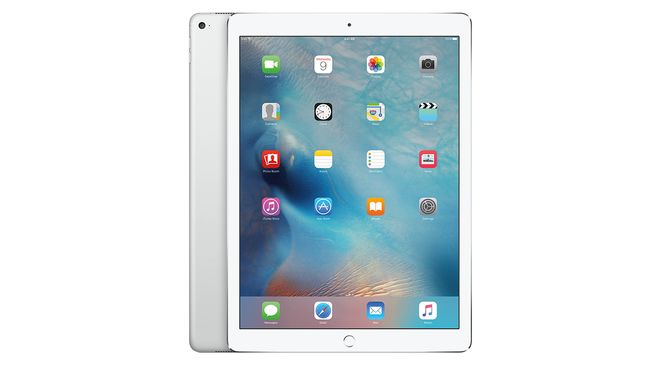
2. Apple iPad Pro

The best large tablet
Weight: 713g | Dimensions: 306x220x6.9mm | OS: iOS 9 | Screen size: 12.9 | Resolution: 2048x2732 | CPU: Apple A9X | RAM: 4GB | Storage: 32/128GB | Battery: 10307mAh | Rear camera: 8MP | Front camera: 1.2MP
This may seem like a blown up iPad Air 2, and that's what it essentially is. The iPad Pro is the largest tablet we've ever seen from Apple and it really is a monster. It has a 12.9-inch display that makes it a difficult to handle. So don't expect any one-handed action here (is anyone else hearing these innuendos?)
Read the full review: Apple iPad Pro
It does mean there's a big beautiful screen you can draw on with the Apple Pencil, and there's a huge 10,307mAh battery under the hood to keep this thing powered on for ages. Inside is an Apple A9X chip and 4GB of RAM. You can also get a huge 128GB of storage, but be warned it's going to cost you.


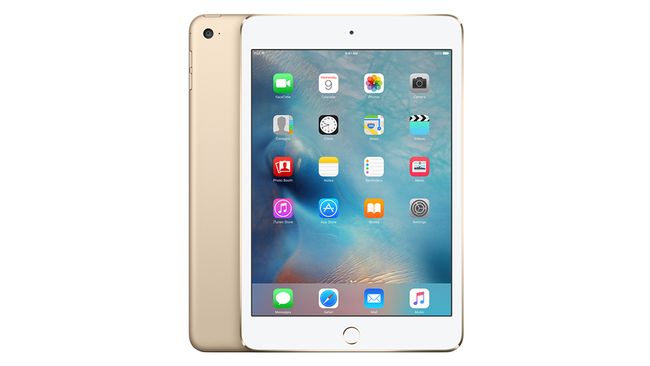
3. Apple iPad Mini 4

The best small tablet
Weight: 299g | Dimensions: 203x134x6.1mm | OS: iOS 9 | Screen size: 7.9 | Resolution: 1536x2048 | CPU: Apple A8 | RAM: 2GB | Storage: 16/64/128GB | Battery: 5124mAh | Rear camera: 8MP | Front camera: 1.2MP
It's not a huge surprise that Apple's smaller tablet is still one of the best on the market. Interestingly, though, its high-end build quality causes it some problems, making it heavier than a lot of the plastic-bodied Android tablets out there.
Read the full review: iPad Mini 4
It's ideal travel companion as it's easy to hold and just the right size for a decent gaming experience. Some people knocked the iPad Mini for not adding many features with the last iteration, but we'd say it's difficult to improve upon perfection. If you're after a small tablet, this is your choice.


4. Samsung Galaxy Tab S3

The best Android tablet you can get
Weight: 429g | Dimensions: 237.3 x 169 x 6mm | OS: Android 7.0 (Nougat) | Screen size: 9.7-inches | Resolution: 1536 x 2048 pixels | CPU: Snapdragon 820 | RAM: 4GB | Storage: 32GB | Battery: 6000mAh | Rear camera: 13MP | Front camera: 5MP
Samsung's latest attempt at a tablet is much better than any Android attempt we've ever seen before. Even though the design isn't all that inspiring (but really, how can you make a tablet inspiring?), it offers a lot of high-end spec under the hood, and a gorgeous 9.7-inch screen up front, and the brilliant S Pen for precise note-taking.
Read the full review: Samsung Galaxy Tab S3
This is the closest Android manufacturers have got to an iPad Pro competitor - which in our eyes is a massive compliment.


5. Google Pixel C

A pretty decent tablet form Google
Weight: 517g | Dimensions: 242 x 179 x 7mm | OS: Android 6.0 Marshmallow | Screen size: 10.2-inch | Resolution: 2560 x 1800 | CPU: Nvidia Tegra X1 | RAM: 3GB | Storage: 64GB | Battery: N/A | Rear camera: 8MP | Front camera: 2MP
Don't mistake the Google Pixel C for just another Nexus product. This is Google's chance to prove it can make incredible hardware without the help of another manufacturer. And it has done exactly that.
Read the full review: Google Pixel C
This is the best Android tablet you can buy right now. It's not exactly cheap at £399 and the keyboard costs an extra £119, but the whole experience is surprisingly great. It's got a very understated design that looks professional and stylish at the same time.


6. Sony Xperia Z4 Tablet

You can take Sony's amazing tablet into the bath with you
Weight: 389g | Dimensions: 254x167x6.1mm | OS: Android 5.0 | Screen size: 10.1 | Resolution: 2560x1600 | CPU: Qualcomm Snapdragon 810 | RAM: 3GB | Storage: 32GB | Battery: 6000mAh | Rear camera: 8.1MP | Front camera: 5.1MP
Sony's Z4 is easily the company's best tablet to date. Like a lot of Sony's phones and tablets it can take a splash in water too, in fact, it can survive full submersion. Handy for tablets that are left around kids, or you want to use in wet places.
Read the full review: Sony Xperia Z4 Tablet
Even more impressive is the fact that you can connect it to your PS4 and play games over your home network. That's a pretty impressive feat, and while it needs a really good quality network, it's an amazing feature you just don't get on other devices that makes the Sony stand out. Oh, and the screen is beautiful too.

7. Microsoft Surface Pro 4

Want Windows 10 instead? Well, if you must...
Weight: 766g | Dimensions: 292 x 201 x 8.5mm | OS: Windows 10 | Screen size: 12.3-inch | Resolution: 2736 x 1824 | CPU: Intel Core M3 | RAM: 4GB | Storage: 128GB | Battery: N/A | Rear camera: 8MP | Front camera: 5MP
Microsoft's Surface Pro 4 may look like the Surface Pro 3, but it's quite a different beast altogether. Once again it can transform between laptop and tablet with ease (there's a simple detachable keyboard), but this time, there are a lot of refinements to make the whole experience easier and more enjoyable.
Read the full review: Microsoft Surface Pro 4
The Surface Pro 4 won't come cheap and the type cover is sold separately - but this is more than a tablet. It's a laptop as well, so it's worth splashing out on it. It's two devices in one!

8. Google Nexus 9

Built by HTC and one of the nicest Nexus devices ever made
Weight: 425g | Dimensions: 228.2x153.7x8mm | OS: Android 5 | Screen size: 8.9 | Resolution: 2048x1536 | CPU: nVidia Tegra K1 | RAM: 2GB | Storage: 16GB | Battery: 6700mAh | Rear camera: 8MP | Front camera: 1.2MP
HTC brings its considerable expertise to the table with the Nexus 9. This tablet is solidly built and offers all of the niceties of a "Nexus" branded product. Put simply, this is a pure Android experience. There is no extra customisation here, this tablet survives on the Google Android experience. It is therefore ideal for enthusiasts who don't want, or need, to be guided through the OS.
Read the full review: Google Nexus 9
The Nexus devices are also the first to get updated to the new versions of Android too, so there's none of that painful waiting to get new features.
Resources: http://www.t3.com/features/best-tablet